
Understanding the Two Types of Spray Foam
Spray polyurethane foam (SPF) insulation comes in two fundamentally different formulations — open cell and closed cell. While both are applied in liquid form that expands on contact, they cure into materials with very different properties, structural behaviours, and removal challenges. Understanding which type is in your loft is the first step to understanding your situation.
Open Cell Spray Foam
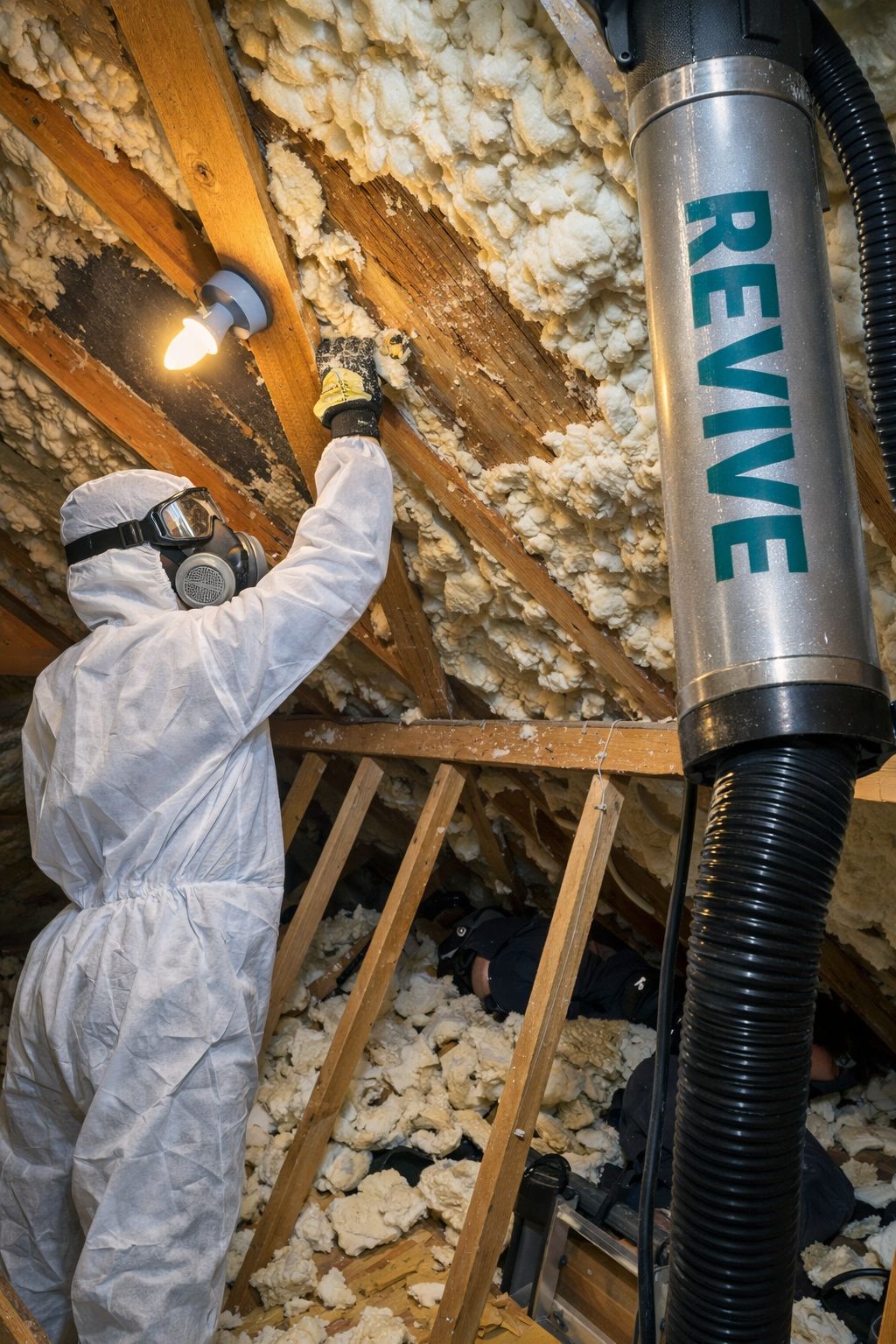
Open cell foam (OCF) is a soft, low-density material. The "open cell" name refers to the fact that the foam's cellular structure is ruptured during curing — the cells are not fully closed, creating a sponge-like material that is soft and flexible.
Characteristics of Open Cell Foam
- Appearance: Soft, cream or yellow in colour, sponge-like texture
- Density: Low (approximately 8–11 kg/m³)
- R-value (insulation): Lower than closed cell foam
- Moisture: Highly absorbent — open cell foam readily absorbs and retains water vapour
- Bond to timber: Strong adhesive bond that causes damage to timbers on removal
- Vapour permeability: Permeable to water vapour
Why Open Cell Is Particularly Problematic
Open cell foam's high moisture absorption is its most damaging property in a loft environment. UK roofs experience significant moisture cycling — condensation, seasonal humidity changes, and occasional water ingress. Open cell foam soaks up this moisture and holds it in sustained contact with the structural timbers. This accelerates rot, promotes fungal growth, and can lead to significant timber deterioration over time.
RICS surveyors and mortgage lenders are specifically alert to open cell foam because the moisture damage may be severe and invisible beneath the foam layer — the only way to know the true condition of the timbers is removal.
Closed Cell Spray Foam
Closed cell foam (CCF) is a rigid, high-density material. The "closed cell" name refers to the fact that the foam's cells are fully sealed during curing, creating a solid, impermeable structure.
Characteristics of Closed Cell Foam
- Appearance: Rigid and dense, typically yellow, off-white, or grey
- Density: High (approximately 30–40 kg/m³)
- R-value: Significantly higher than open cell foam
- Moisture: Resistant to moisture absorption
- Bond to timber: Extremely strong, rigid bond that significantly increases removal complexity
- Structural impact: The rigid nature can cause stress on timber structures over time
The Closed Cell Removal Challenge
Closed cell foam's extreme rigidity and adhesive bond make it the more technically challenging removal task. It cannot be torn or pulled away — it must be mechanically extracted using rotary tools, specialist vacuum equipment, and significant expertise. The process requires care to avoid damage to the underlying timbers, and thorough extraction is essential as any residue will still be flagged by surveyors.
The Removal Process for Each Type
Countrywide Spray Foam Removal uses different techniques depending on the foam type identified during our initial assessment:
- Open cell removal: Systematic extraction using industrial vacuum systems and manual techniques, followed by thorough timber cleaning and moisture assessment
- Closed cell removal: Rotary extraction tools combined with specialist vacuum equipment to mechanically break down and remove the rigid foam layer by layer
In both cases, the process concludes with a full timber inspection, professional preservation treatment, independent surveyor sign-off, and the issuance of our insurance-backed completion certificate. Contact us to identify your foam type and receive a free removal quote.
Which Type Do I Have?
The easiest way to identify your foam type is to request a free professional assessment. Our surveyors will identify the foam type, assess the extent of coverage and any timber damage, and provide a detailed fixed-price removal quote. You can also make an initial judgement:
- If the foam is soft, spongy, and flexible — it is almost certainly open cell foam
- If the foam is rigid, hard, and cannot be compressed — it is closed cell foam
- If the foam appears in layers or mixed zones — it may be a hybrid application requiring expert assessment
Need Help Right Now?
Free assessment within 2 hours · Fixed-price quotes · All lenders accepted
Frequently Asked Questions
Which type of spray foam is worse — open cell or closed cell?
Both types cause mortgage and lending problems, but open cell foam is generally considered more problematic by lenders and surveyors due to its high moisture absorption properties. Closed cell foam is harder and more rigid, making removal more technically challenging but creating different structural concerns.
How do I know which type of spray foam I have?
Open cell foam is soft, spongy, and typically cream or yellow in colour. Closed cell foam is rigid, dense, and often yellow or off-white. A certified surveyor can identify the type during a free assessment visit.
Does the type of foam affect removal cost?
Yes. Closed cell foam typically requires more specialist equipment and labour due to its rigid adhesive properties, making it somewhat more expensive to remove than open cell foam. However, both types require certified professional removal for the process to be accepted by mortgage lenders.
Can I remove open cell foam myself?
DIY removal is strongly discouraged. It is physically possible to remove some open cell foam manually, but without certified equipment, timber inspection expertise, and the ability to issue a lender-recognised completion certificate, DIY removal will not resolve your mortgage problem.
Ready to Resolve Your Spray Foam Issue?
Get a free, no-obligation assessment from the UK's leading certified removal specialists.