
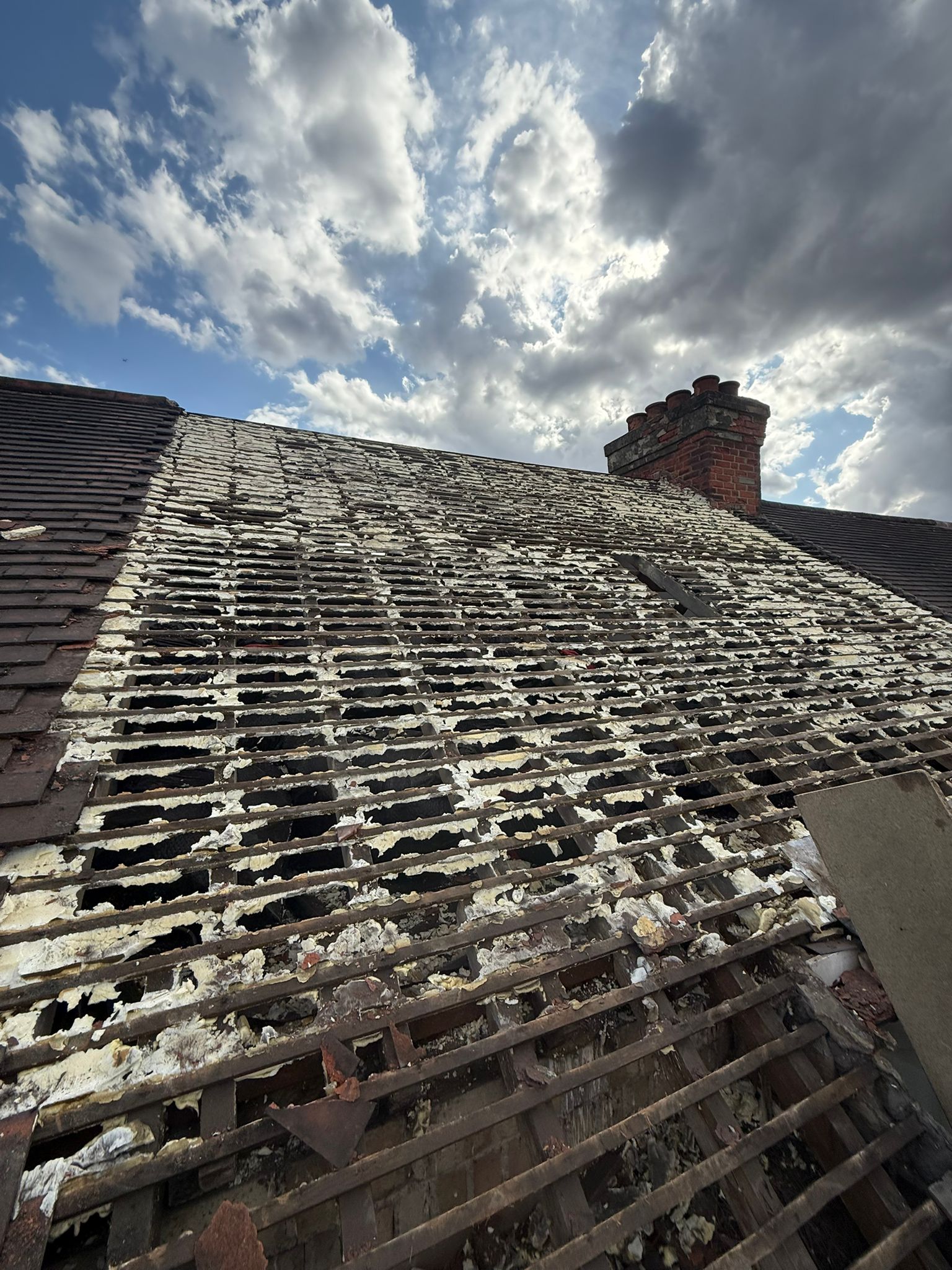
The Lender's Perspective on Spray Foam
To understand why UK mortgage lenders so consistently refuse properties with spray foam insulation, you need to understand how lenders assess mortgage risk. When a lender agrees to a mortgage, they are effectively using the property as security for the loan. This means the property needs to be:
- In a condition that a surveyor can fully inspect and accurately value
- Free from defects that might cause significant future deterioration
- Sellable in the open market without specialist buyer requirements
- Compliant with RICS and industry standards for residential lending
Spray foam insulation fundamentally undermines all four of these requirements.
Structural Inspection Is Impossible
The single most significant issue for lenders is that spray foam — particularly closed cell foam — forms a rigid, adhesive bond with roof timbers. This bond is so thorough that it completely covers the timber surfaces, making it impossible for a surveyor to assess the structural condition of the roof without removing the foam.
From a lender's perspective, this is unacceptable. Structural integrity is a fundamental requirement of any mortgageable property. If a surveyor cannot confirm that the roof structure is sound, the lender cannot confirm that their security (the property) has the value stated in the application. The result is an automatic decline or a conditional retention requiring removal.
Open Cell Foam: The Moisture Problem
Open cell spray foam presents a specific and severe additional problem: moisture absorption. Open cell foam is a soft, sponge-like material that absorbs water vapour and condensation from the roof space environment. This moisture is then held in direct contact with the structural timbers for prolonged periods.
The consequences are predictable and well-documented: accelerated timber decay, wet rot, dry rot, and in severe cases, structural failure of the roof. Lenders are acutely aware of this risk, and RICS guidance explicitly highlights open cell foam as a particular concern for this reason.
Industry Guidance and Policy
The mortgage industry's negative stance on spray foam is not arbitrary. It is backed by formal guidance from several authoritative bodies:
- RICS (Royal Institution of Chartered Surveyors): Has issued guidance advising valuers to flag spray foam in roof spaces and recommend investigation prior to lending.
- Property Care Association (PCA): The UK's leading specialist property care trade body has published clear guidance on the risks of spray foam in loft spaces.
- UK Finance: The trade body representing UK mortgage lenders has acknowledged the industry-wide issue of spray foam in residential properties.
- Energy Saving Trust: Has updated its guidance to reflect lender concerns about spray foam insulation.
Valuation and Resale Impact
Beyond the structural concerns, lenders are also concerned about the market value and saleability of spray foam properties. Research and market experience consistently show that:
- Spray foam properties are more difficult to sell, reducing the pool of potential buyers
- Cash buyers typically demand significant price reductions to account for removal costs and risk
- RICS valuers routinely apply downward adjustments to spray foam properties
- The 'subject to removal' conditions attached to some mortgage approvals can cause sales to collapse
The Solution: Certified Professional Removal
The only reliable way to resolve a lender's concern about spray foam is to have it professionally removed by a certified specialist. Countrywide Spray Foam Removal provides a fully certified removal service that includes complete foam extraction, timber inspection and treatment, and the issuance of a lender-accepted completion certificate.
Once our certificate is presented to a lender, the spray foam issue is resolved entirely. You can proceed with your mortgage, remortgage, or property sale without the spray foam being a factor. Get a free assessment today.
Need Help Right Now?
Free assessment within 2 hours · Fixed-price quotes · All lenders accepted
Frequently Asked Questions
Do all mortgage lenders refuse spray foam properties?
The vast majority of high-street and mainstream lenders will refuse or impose retentions on spray foam properties. Specialist lenders may consider them, but typically at significantly higher rates.
What does a mortgage surveyor say about spray foam?
RICS surveyors are trained to flag spray foam in roof spaces. Most surveyors will note it as a 'defect' or 'material consideration' requiring further investigation or removal before lending can proceed.
Can spray foam be left in place for mortgage purposes?
In almost all cases, no. Standard lenders require removal and a certified completion certificate. Leaving foam in place and hoping a lender will overlook it is not a viable strategy.
How does spray foam affect remortgaging?
Remortgaging is affected in exactly the same way as a new mortgage. If your current lender's surveyor flags spray foam at remortgage, funds can be withheld. This is increasingly common as lenders conduct more thorough property surveys.
Ready to Resolve Your Spray Foam Issue?
Get a free, no-obligation assessment from the UK's leading certified removal specialists.